
Ultrasonic Cleaner for 3D Metal Prints
Removing Contaminants from Metal Additive Manufacturing Parts
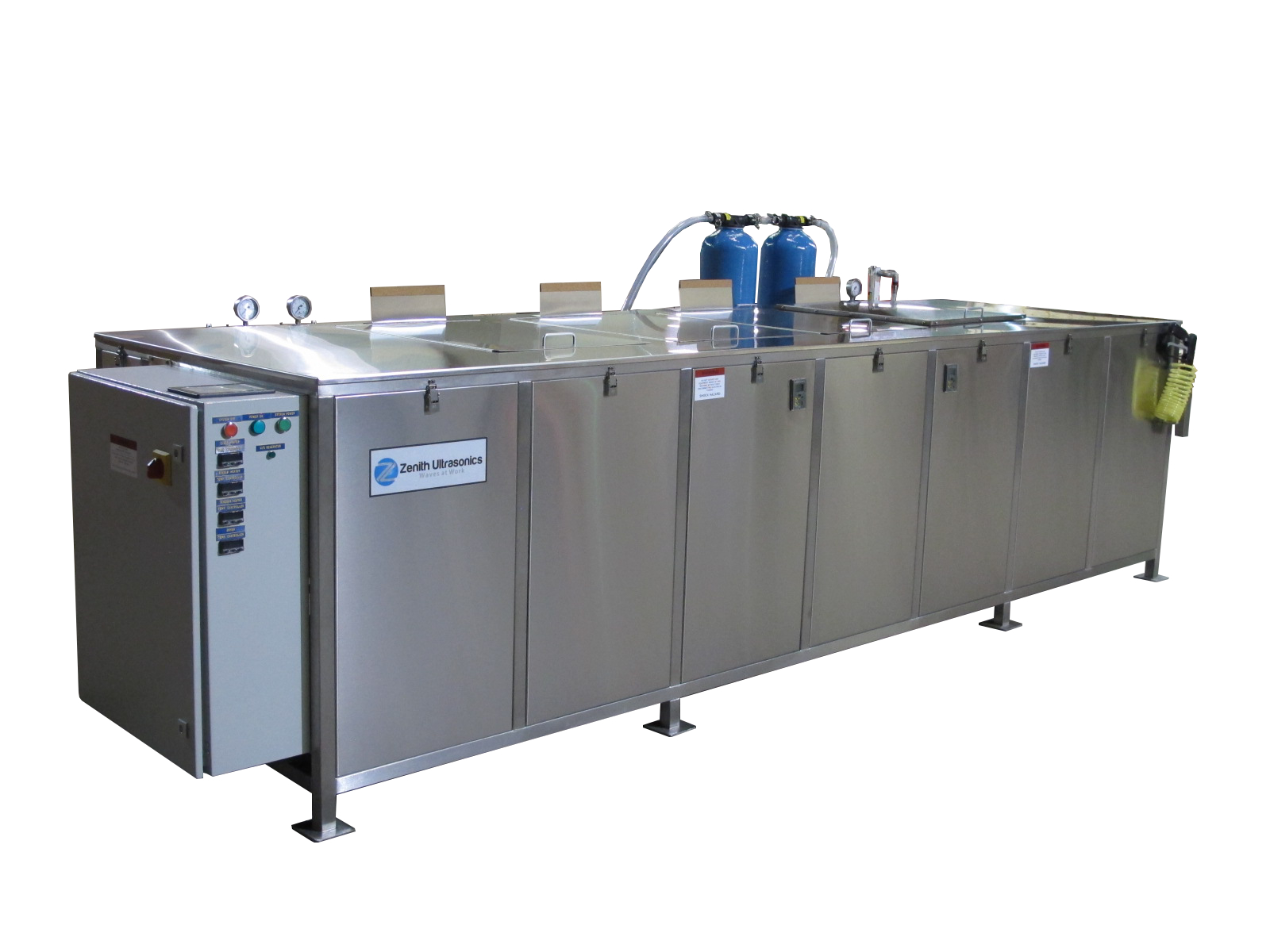
Metal additive manufacturing produces geometries that conventional machining cannot replicate, but those same geometries trap powder, oils, and process residue in places traditional cleaning cannot reach. For manufacturers qualifying parts for aerospace, medical or automotive programs, an ultrasonic cleaner for 3D prints has become a standard line in the post-processing workflow rather than an optional finishing step. This guide looks at the contaminants specific to metal 3D printed components, why conventional cleaning methods fall short on complex internal geometries, and what to evaluate when specifying an industrial system built for additive manufacturing volumes.

Made in the USA

Custom Engineered Solution

Comprehensive Warranty
Get In Touch
Why Cleaning 3D Printed Metal Parts Is Critical
Powder bed fusion and other metal additive processes build parts layer by layer, which means every internal channel, lattice, and blind feature can hold onto unmelted powder or process debris long after the build is complete. Left in place, that residue compromises fit, fatigue life, and surface finish. The consequences vary by application but are rarely minor:
- Aerospace components must meet strict cleanliness specifications before they clear inspection, since trapped powder in a structural or flow path can affect part performance under load.
- Medical implants require complete debris removal, particularly for porous or lattice structures designed to integrate with tissue, where residual particulate is not an acceptable risk.
- Automotive parts produced for functional testing or low-volume production runs need consistent, repeatable cleanliness to support downstream coating and assembly steps.
- Tooling inserts built with conformal cooling channels lose efficiency if powder or oxide is left inside the channel walls.
Common Contaminants Found in Metal Additive Manufacturing Parts
Post-processing teams working in metal additive manufacturing cleaning typically deal with a recurring set of contaminants. Recognizing the source of each helps determine the right cleaning method and cycle.
- Residual Metal Powder: Unfused or partially fused powder remains on external surfaces and within porous structures after a powder bed fusion build, regardless of whether the process is DMLS, SLM, or binder jetting.
- Trapped Powder in Internal Channels: Conformal cooling channels, lattice cores, and other internal features can hold powder that is not accessible by line-of-sight cleaning methods and is not removed by gravity or vibration alone.
- Machining Oils: Parts that move into CNC finishing after printing pick up cutting and lubricating oils that must be removed before coating, welding, or inspection.
- Polishing Compounds: Vibratory or abrasive finishing steps used to improve surface roughness leave behind compound residue that can mask surface defects if not fully cleaned.
- Oxides and Surface Deposits: Heat treatment and stress-relief cycles common to metal AM parts can produce surface oxides that need to be removed before plating or final inspection.
- Dust and Handling Contamination: General handling, storage, and transport between process steps introduces dust and particulate that accumulates on complex surfaces over the course of a build cycle.
Why Traditional Cleaning Methods Struggle with Metal 3D Printed Components
Compressed air, brushing, and manual wipe-downs were built for parts with accessible, open surfaces. Metal AM parts rarely fit that description. Residual powder removal from 3D printed parts is especially difficult when the geometry includes:
- Lattice structures, where internal struts and nodes block direct access to trapped powder.
- Internal cooling channels, which require cleaning along the full length of a path that cannot be seen or reached by hand.
- Complex geometries with varying wall thickness, where aggressive mechanical cleaning risks damaging thin sections.
- Blind holes, which trap powder and oxide at the base where manual tools cannot reach.
These constraints push manufacturers toward a cleaning method that works through the liquid medium itself rather than relying on direct mechanical or line-of-sight access.
How Ultrasonic Cleaning 3D Printed Parts Works
Ultrasonic cleaning 3D printed parts relies on cavitation: high-frequency sound waves passed through a cleaning solution generate microscopic bubbles that implode against the part surface. Each implosion releases a small, localized scrubbing action capable of dislodging particulate without abrasive contact.
That mechanism is what makes ultrasonic cleaning effective on additive manufacturing geometry. Because the cleaning energy travels through the liquid and walls of the material rather than along a direct line of sight, it reaches into internal channels, lattice cavities, and blind features that brushing or air blasting cannot access. Frequency selection determines bubble size and cleaning intensity: lower frequencies generate larger, more aggressive bubbles suited to heavier residual powder, while higher frequencies produce smaller, gentler bubbles appropriate for delicate lattice structures and thin-wall sections.
For powder removal specifically, sustained cavitation breaks up agglomerated powder at the surface and within accessible internal volumes, then carries it into the cleaning solution where filtration removes it from the bath before it can redeposit on the part.
Contaminants Removed by a 3D Print Ultrasonic Cleaner
A properly specified 3D print ultrasonic cleaner addresses the full range of contaminants introduced across the additive manufacturing and post-processing workflow:
| Contaminant | Source |
|---|---|
| Residual Metal Powder | Powder Bed Fusion |
| Machining Oils | CNC Operations |
| Polishing Compound | Finishing Process |
| Grease | Handling |
| Dust | Storage |
| Oxides | Heat Treatment |
Benefits of Using an Ultrasonic Cleaner for 3D Prints in Metal Manufacturing
- Complete contaminant removal from internal and external surfaces, including features inaccessible to manual cleaning.
- Better coating adhesion, since plating, painting, and other finishes bond more reliably to a fully clean substrate.
- Improved inspection accuracy, as cleaner surfaces make it easier to detect porosity, cracking, or other defects.
- Reduced rejects, by eliminating the contamination-related failures that surface later in assembly or testing.
- Enhanced product reliability, particularly for parts subject to fatigue loading or biological integration.
- Faster cleaning cycles compared to manual brushing, air blasting, or repeated handling steps.
What Makes the Best Ultrasonic Cleaner for 3D Prints?
Selecting the best ultrasonic cleaner for 3D prints for an industrial AM operation comes down to matching the system to the part geometry, contaminant type, and production volume. Buyers evaluating industrial ultrasonic cleaning systems should look at:
- Frequency selection: The ability to match or combine frequencies for different powder loads, lattice densities, and surface finishes.
- Heated tanks: Elevated solution temperature improves cleaning chemistry performance on oils, polishing compounds, and oxide layers.
- Filtration systems: Continuous filtration keeps removed powder out of the bath so it does not redeposit on parts.
- Tank size: Sized to the part envelope and batch volume, from benchtop systems for prototype runs to large tanks for production batches.
- Stainless steel construction: Durable, corrosion-resistant tank and fixturing built for continuous industrial use.
- Automation options: Automated hoist and transport between multi-stage tanks for consistent, repeatable cycles at production volume.
- Oscillation Systems: Crucial for successful cleaning of internal part areas, oscillation serves to flush ultrasonically-loosened contaminants out of the parts and into the fluid with through-liquid-surface oscillation being significantly more effective than sub-surface oscillation.
Industries Using Ultrasonic Cleaning for Metal Additive Manufacturing
Demand for reliable AM post-processing cleaning spans every sector that has adopted metal 3D printing for functional, end-use parts:
- Aerospace: Structural brackets, fuel system components, and lightweight lattice parts that must meet cleanliness specifications.
- Medical: Implants and surgical instruments requiring complete particulate removal from porous and lattice structures.
- Automotive: Prototype and low-volume functional parts moving into testing and assembly.
- Defense: Mission-critical components with strict reliability and inspection requirements.
- Industrial Manufacturing: Tooling, fixtures, and conformal-cooled inserts used across production lines.
Why Zenith Ultrasonics for Metal Additive Manufacturing Cleaning?
Zenith Ultrasonics has engineered industrial cleaning equipment since 1935, and that depth of experience carries directly into ultrasonic cleaning additive manufacturing components. For manufacturers handling DMLS part cleaning, SLM part cleaning, or other powder bed fusion cleaning requirements, Zenith builds standard and custom ultrasonic cleaning systems around the specific geometry and contaminant profile of the part – not a generic cleaning cycle.
Multi-stage cleaning lines, including systems built around Zenith’s patented CROSSFIRETM Multi-Frequency technology (US Patent 5,865,199 and 6,019,852), allow a single system to move from aggressive powder removal at lower frequencies to gentler finishing at higher frequencies without transferring the part between machines. Where higher throughput is required, Zenith’s ADVANTAGE Automation System (US Patent 10,112,221) automates transport between multi-stage tanks for consistent, repeatable post-processing of metal 3D printed parts at production volume.
Every potential customer is supported by an included test cleaning to optimize process parameters for the part before the system ships, technical guidance from initial design through ongoing ownership, and an industry-leading comprehensive two-year/10-year warranty. That level of support is what manufacturers rely on when specifying an ultrasonic cleaner for 3D prints that has to perform consistently, build after build.
Talk to Zenith Ultrasonics about a custom or standard cleaning system for your metal additive manufacturing line.
Looking for something completely different?
Our Products Page will provide you with photos, descriptions, and links to all of our ultrasonic cleaning equipment.
Learn MoreWant to learn more about ultrasonics?
Our Leaning Center will provide you with a great deal of information about the ultrasonic cleaning process.
Learn More