

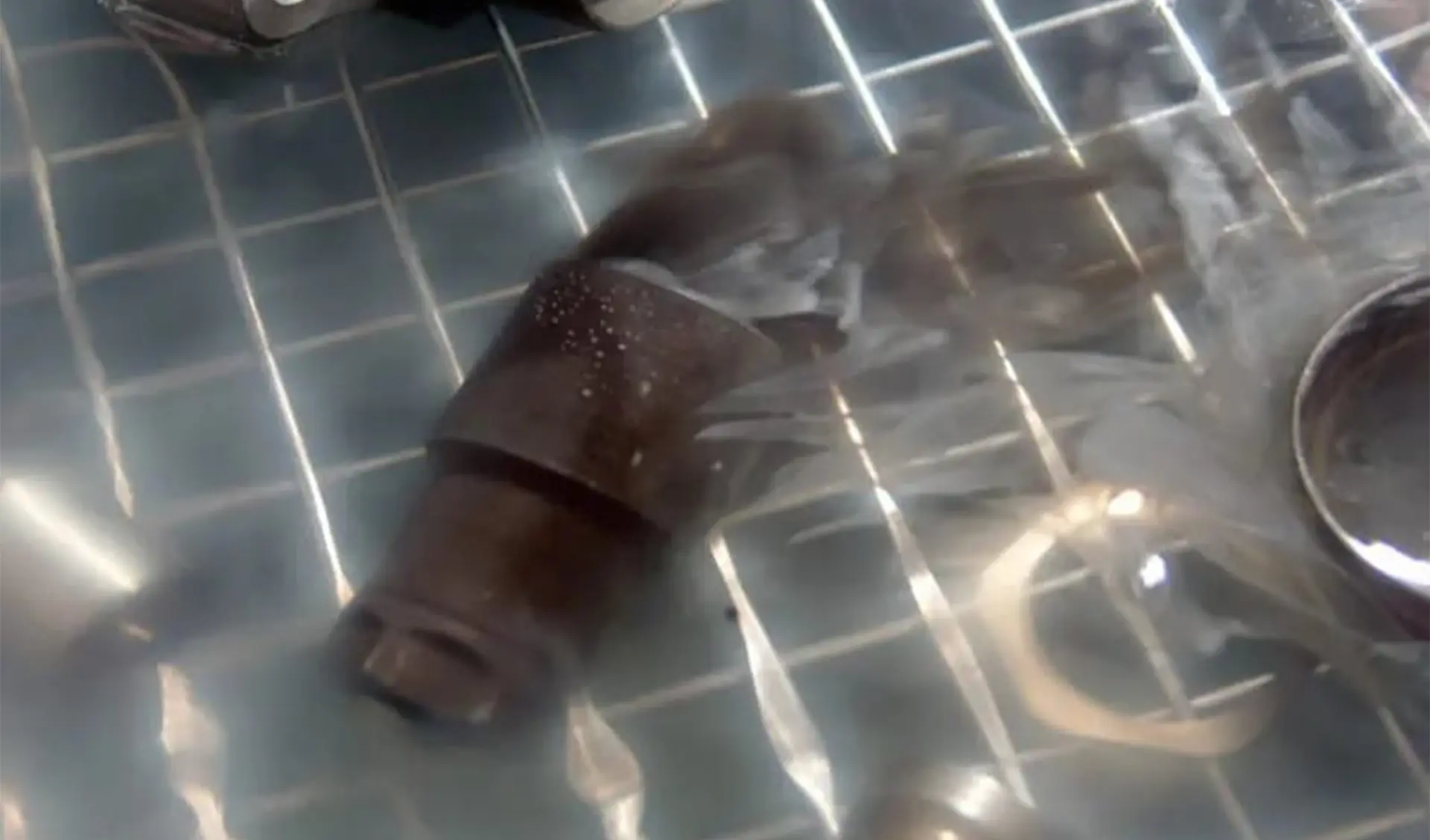
Ultrasonic cleaning has become synonymous with consistency and reliability in manufacturing. It’s a go-to solution across sectors where traditional methods fall short in delivering clean parts without manual abrasion, harsh chemicals, or extended downtime. But for all its advantages, ultrasonic cleaning is still widely misunderstood.
Whether it’s choosing the wrong frequency, running cycles too long, or misjudging detergent use, small errors can lead to damaged parts, rework delays, or wasted chemistry. Let’s quickly clear up a few of the most common myths surrounding ultrasonic cleaning.
Myth #1: “More Power Equals Better Cleaning”
It’s easy to assume that boosting ultrasonic power leads to faster, deeper cleaning. More watts should mean more cavitation, and that should mean better results, right? Not automatically. When ultrasonic energy exceeds the optimal level for a given load, the excess energy can lead to surface erosion, micro-pitting, and cavitation fatigue. Instead of cleaning more effectively, you may be accelerating wear or compromising performance.
The key is balance. Power should be matched to the type of contamination, the material, the part geometry, and the tank’s frequency. At Zenith, we develop custom systems to hit the right power density for the application, not just the highest wattage possible. Controlled power delivers consistent results without exposing parts to unnecessary force.
Myth #2: “Ultrasonic Cleaning Is a One-Step Process”
It’s easy to think ultrasonic tanks are plug-and-play: drop the part in, turn it on, and you’re done. But cleaning is rarely that simple, especially in precision manufacturing. Ultrasonic cleaning is often just one part of a larger, multi-stage process. Skipping pre-cleaning steps can overload the detergent with soils it’s not designed to handle, while omitting rinse stages can lead to redeposition, residue, or chemical staining.
Even the cleanest ultrasonic stage can’t compensate for poor preparation or incomplete rinsing. Zenith systems often include integrated multi-stage designs with dedicated pre-wash, ultrasonic, rinse, and drying stages, each engineered to perform a specific function. A one-size-fits-all approach may work for light duty, but not when cleaning specs are tight and stakes are high.
Myth #3: “Clean for Longer, Just to Be Safe”
Many operators err on the side of longer cycles, thinking extra time guarantees better cleaning. But longer isn’t always better. Prolonged exposure can result in overprocessing, which may lead to surface fatigue, part discoloration, or degradation of delicate finishes. In some cases, it can even loosen press-fits or damage internal bonds. Beyond that, running longer cycles than necessary wastes detergent, water, and energy.
An effective ultrasonic process is dialed in for dwell time just as precisely as temperature, power, or chemistry. The right timing depends on several factors: the type of contamination, the surface material, the geometry of the part, and the role of any supporting agitation or chemistry. A 3-minute cycle might outperform a 15-minute one if the system is properly tuned.
Myth #4: “All Frequencies Clean the Same”
Not all cavitation is created equal. Frequencies aren’t interchangeable; they define how the cleaning energy behaves, and where that energy goes. Lower frequencies (like 25–40 kHz) produce larger cavitation bubbles that collapse more violently. That may work well for heavy-duty applications, like removing baked-on carbon or coarse particulates, but can be too aggressive for fragile or detailed parts. Higher frequencies (like 68–170 kHz) produce smaller bubbles that penetrate tight geometries and provide gentler scrubbing action, making them ideal for microelectronics, optics, and fine medical devices.
Choosing the wrong frequency can lead to missed soils or damaged parts. That’s why Zenith systems support multiple frequencies or even dual-frequency designs, giving manufacturers the flexibility to match each application to the right energy profile.
Myth #5: “Detergent Isn’t That Important”
There’s a tendency to over-credit the physical action of cavitation and undervalue the role of chemistry. But even the best ultrasonic system won’t perform to spec without the right detergent.
Cavitation provides the mechanical energy, but it’s the detergent that dissolves oils, lifts oxidation, and neutralizes residues. Without chemistry, contaminants can still stick to surfaces or reattach mid-cycle. Using the wrong chemistry (or the wrong dilution) can result in incomplete cleaning, damaged coatings, or excessive foaming that disrupts cavitation.
At Zenith, we work with customers to pair systems with compatible detergents for their soil profile, often refining dilution ratios to reduce detergent use without sacrificing performance. In many cases, that optimization shortens cycle times while improving outcomes.
Myth #6: “Tank Design Doesn’t Matter (It’s All About the Transducers)”
Even among experienced manufacturers, there’s a belief that transducers are the whole story. But cleaning performance depends just as much on the tank they’re mounted to.
Tank geometry determines how cavitation waves form and reflect. Improper dimensions can cause dead zones, standing wave interference, or energy imbalances. The placement of filters, overflow weirs, drains, and heaters all impact how well contaminants are removed and how long chemistry lasts. So does agitation; without it, parts can sit in low-energy bands or shielded areas, leaving critical features uncleaned.
Transducers, filtration, overflow, heating, and agitation are all integrated into your Zenith system, so it’s engineered for uniform cavitation and repeatable results. That’s the difference between an off-the-shelf tank and a fully optimized solution.
Education Pays Off
Most ultrasonic cleaning myths trace back to legacy assumptions, whether from older systems, internal lore, or repurposed solvent cleaning logic. But today’s cleaning standards are higher, tolerances tighter, and materials more varied. That’s why understanding how ultrasonic cleaning actually works—and what variables matter—can make a big difference in your business and bottom line.
Sometimes, the difference between good and great is just a better question asked.
If you’re ready to re-evaluate your process or simply want an expert second look, Zenith can help you spot inefficiencies and fine-tune your approach. Speak with our team today.